
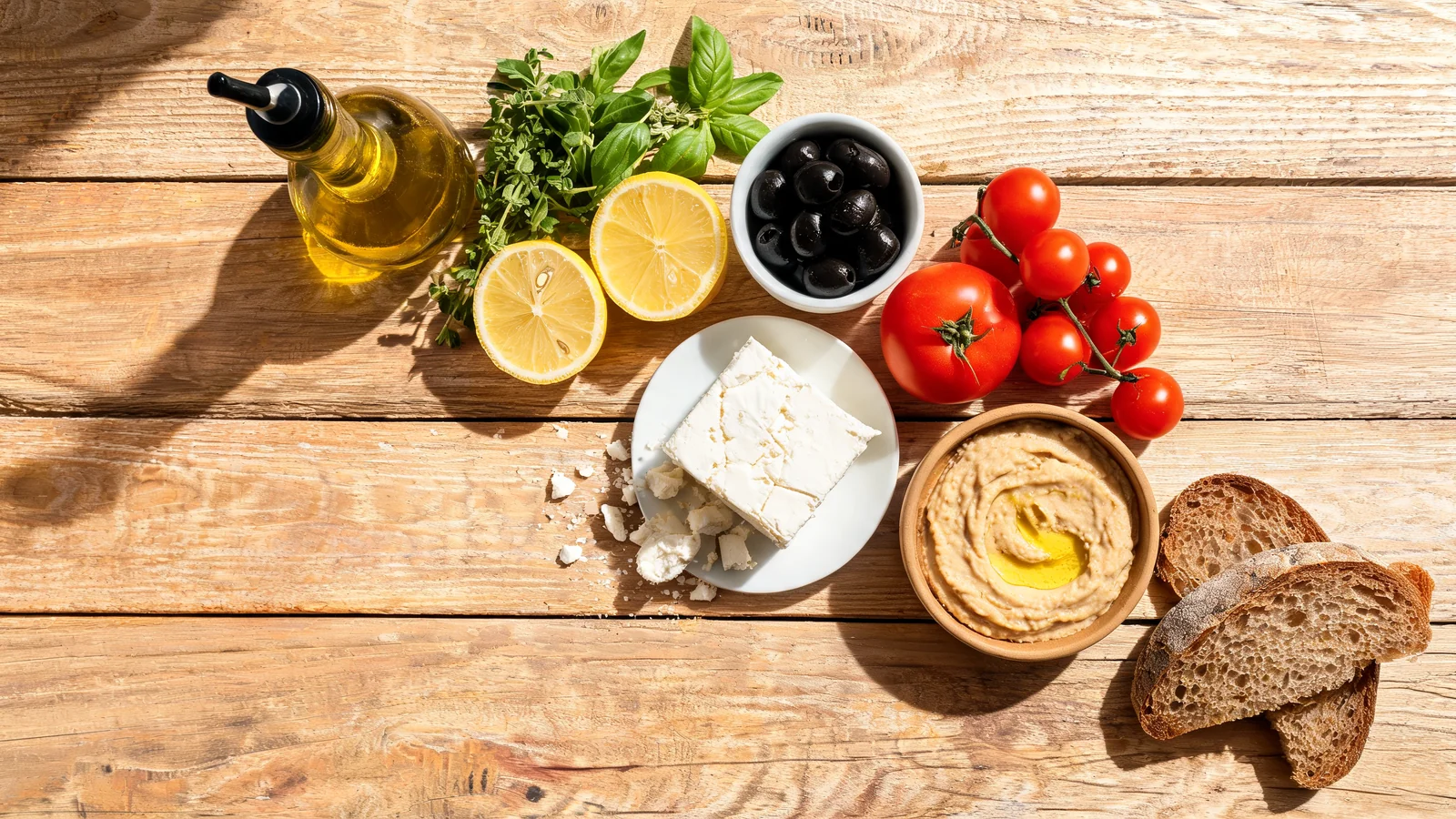
The Mediterranean way of eating has more long-term research behind it than any other diet pattern, particularly for women in our 50s and 60s. The studies are consistent: women who eat closer to a Mediterranean pattern tend to have better cardiovascular markers, more stable blood sugar, healthier inflammation profiles, and (in observational data) lower rates of cognitive decline. Many women report it's also the only "diet" they've stayed on for more than a year, because it doesn't ask you to give up real food.
That said, "Mediterranean" gets thrown around so loosely that the actual pantry behind it gets lost. Here are the eight staples we keep on hand year-round, why each one earns its space, and how to actually use them this week.
What We Looked For
- Real research support for women in our age bracket (cardiovascular, blood sugar, bone, cognitive)
- Versatility across breakfast, lunch, and dinner
- Shelf-life and sourcing that fits a real pantry, not a chef's prep table
- Protein and fiber that hold up at this stage of life
- No magical claims (the Mediterranean pattern works because of the whole, not because any one ingredient is a "superfood")
The 8 Staples Worth Stocking
Extra Virgin Olive Oil (the Real Stuff)
The single most important Mediterranean staple, and the one most women in our age bracket are buying wrong. Read the label: the bottle should be dark glass (light degrades the oil), the harvest date should be within the last 18 months, and the country of origin should be specific (not "blended from multiple countries"). Cheap "EVOO" from a clear bottle on a supermarket shelf is often rancid before you open it.
Use it on salads, drizzled over roasted vegetables, in cold preparations, and for medium-heat cooking. Many women report a meaningful drop in inflammation markers when they switch from seed oils to a real Mediterranean olive oil for daily cooking.
Fatty Fish (Fresh, Frozen, or Canned)
Salmon, sardines, mackerel, anchovies. The omega-3 content matters at this stage of life for cardiovascular and cognitive support. Fresh is great when it's affordable, but frozen wild salmon and quality canned sardines (like Wild Planet or Patagonia Provisions) are honest substitutes. Two to three servings a week is the target most cardiologists recommend.
If you don't love fish texture, start with canned sardines on toast with lemon and olive oil. It's a five-minute lunch, hits 22 grams of protein, and many women who claim they "don't like sardines" turn out to like them just fine when prepared this way.
Legumes (Lentils, Chickpeas, White Beans)
The Mediterranean diet leans hard on legumes for protein and fiber, and women in their 50s and 60s typically benefit from more of both. A cup of cooked lentils delivers 18 grams of protein and 16 grams of fiber. Chickpeas roasted with olive oil and za'atar are a snack or salad topper. White beans in soup or stew become a complete one-pot meal with minimal effort.
Buy dried for the best texture, but quality canned (Eden Foods, Jovial, or any BPA-free can) is fine for weeknight cooking.
Plain Greek Yogurt or Skyr
High protein, real probiotics, and a versatile base. A cup of plain Greek yogurt or Icelandic skyr delivers 20+ grams of protein. Top with berries, walnuts, and a drizzle of olive oil (yes, olive oil on yogurt, this is a Mediterranean thing) for a breakfast that holds you until lunch. Avoid the flavored sweetened versions, which often have more sugar than ice cream.
Brands worth buying: Fage Total 5%, Stonyfield Organic plain, Siggi's plain. Check the label for ingredients. The list should be milk and cultures.
Walnuts and Almonds
The PREDIMED study (one of the most cited Mediterranean diet trials) used a daily handful of walnuts as a key intervention. The effects on cardiovascular markers were measurable. Walnuts deliver omega-3s. Almonds deliver vitamin E and magnesium. A small handful (one to two ounces) daily is the dose most studies use.
Buy raw, store in the freezer to keep them from going rancid (nuts oxidize fast at room temperature), and eat them as snacks, on salads, or topping yogurt.
Whole Grains (Farro, Bulgur, Whole Oats)
Mediterranean carbs are not white pasta, despite what social media will tell you. Real Mediterranean cooking leans on whole, intact grains (farro, bulgur, barley, whole oats) that deliver fiber, B vitamins, and a slow-burning carb load that supports stable blood sugar. For women in perimenopause and menopause, the blood sugar piece matters more than it used to.
A pot of cooked farro keeps for a week and becomes a base for grain bowls, soups, or breakfast porridge. Bob's Red Mill is widely available. Anson Mills is a step up if you want to invest.
Tomato Products and Garlic
San Marzano canned tomatoes, jarred passata, tomato paste in a tube, and good garlic are the building blocks of half of Mediterranean cooking. Cooked tomato is one of the few foods where the cooking actually increases the bioavailability of the lycopene, an antioxidant linked to cardiovascular health.
Quality matters here. Cento San Marzano DOP tomatoes (look for the actual DOP seal) are worth the few extra dollars. A 30-minute simmer with garlic and olive oil produces a sauce that beats anything in a jar.
Quality Collagen or Bone Broth
Not strictly Mediterranean, but a useful addition for women in our age bracket who are managing protein intake, joint comfort, and skin support. Many women report a difference in how their joints feel and how their skin behaves with daily collagen, particularly when paired with the broader Mediterranean pattern.
A scoop of quality collagen peptides in coffee or yogurt is the easiest way to add 10 to 20 grams of protein to a meal that might otherwise be light on it. Vital Proteins is the brand we've used most consistently.
See Vital ProteinsThe Mediterranean pattern works because of the whole, not because any one ingredient is a superfood. Stock the staples, learn three or four reliable preparations, and the rest follows.
Putting It Together This Week
If you've never cooked Mediterranean before, here's the simplest way to start. Buy three of the staples above this week (we'd suggest olive oil, canned sardines or wild salmon, and lentils). Make these three things over the next seven days:
- Breakfast (3 days): plain Greek yogurt + berries + walnuts + olive oil
- Lunch (3 days): canned sardines on whole-grain toast + lemon + olive oil + a green salad
- Dinner (3 days): lentil + tomato + spinach soup with a drizzle of olive oil and a piece of bread
That's nine real meals, hitting Mediterranean targets, that take a combined 90 minutes of kitchen time across the week. Not a transformation. A foundation.
If You'd Rather Skip the Cooking
Sunbasket's Mediterranean menu plan and Factor's Mediterranean-inspired meals do this work for you, with ingredient quality strong enough that we recommend them often to readers who want the eating pattern without committing to a kitchen overhaul.
Want a Mediterranean week without the meal planning?
Sunbasket's Mediterranean and "lean and clean" menus are the strongest in the meal-kit space for women looking to adopt this eating pattern. Their first-week discount makes a single test week affordable.
Try SunbasketThe Bottom Line
The Mediterranean diet isn't a diet you start. It's a pantry you build, a few preparations you learn, and a way of eating you settle into. The eight staples above are the ones that earn their shelf space year-round in our kitchen. Pick three, learn one preparation for each, and you've already moved your week meaningfully toward an eating pattern that the research consistently supports for women in our age bracket.
The simplest add to a Mediterranean week
A scoop of Vital Proteins collagen peptides in your morning coffee or yogurt adds 18 grams of protein without changing the flavor. The simplest way to nudge your protein intake up while you build the rest of the pattern.
See Vital Proteins