
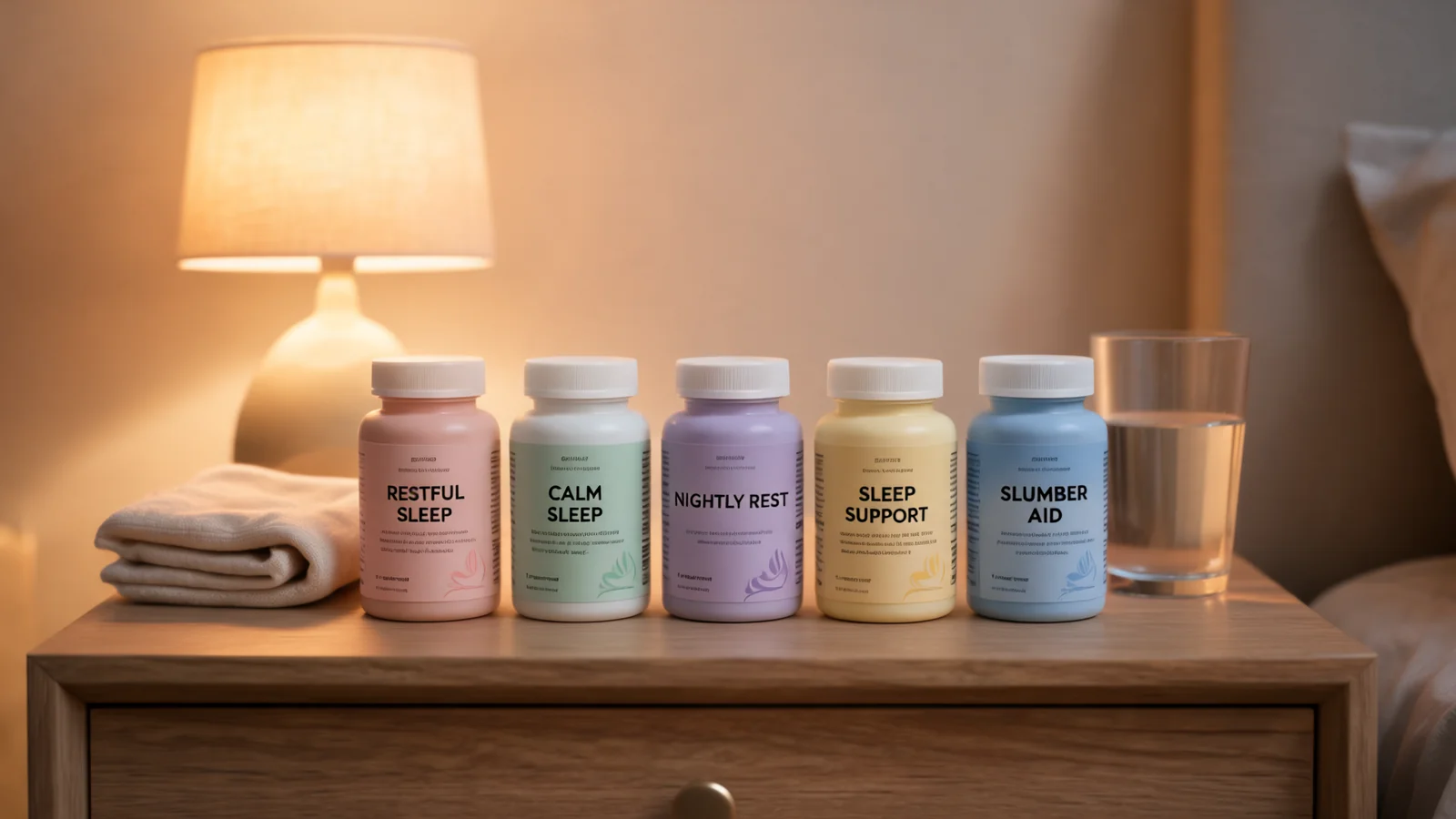
Sleep changes after 50 are not a moral failing. They are a hormonal shift, and most of the sleep advice aimed at women in their 50s is written by people who have not lived in this body yet. After three years of running my own informal trials (and dragging two friends through theirs), here is the honest ranking of what actually helps.
None of these are sleeping pills. None of them will knock you out. What they do is reduce the nervous system tension and hormonal turbulence that is waking many menopausal women up at 3 a.m. in the first place. Stack the right two or three, and the whole night gets quieter.
What I Looked For
- Mechanism that actually addresses menopausal sleep disruption (not generic "relaxation")
- Real-world results in my own and my friends' sleep over a 30-day window
- Clean third-party tested formulas, not proprietary blends with hidden doses
- Compatibility with each other (so they can be layered, not just used solo)
- Reasonable cost relative to the result
Magnesium Glycinate
The single most effective supplement on this list, and the one I will not travel without. 400 mg of magnesium glycinate at bedtime cut my 3 a.m. wake-ups by about 80% within three weeks. The mechanism is real: most menopausal women are functionally low in magnesium, the glycine in glycinate has its own calming effect on the central nervous system, and the absorption rate is dramatically better than the cheap drugstore magnesium oxide most women have tried and dismissed. Many women report similar shifts.
Ritual's Essential for Women 50+ now includes a small magnesium dose alongside their full multivitamin. If you want one product to handle morning vitamin and sleep-supportive minerals together, that's the cleanest option. If you want a higher therapeutic dose for sleep specifically, a standalone glycinate at 400 mg is the move.
See Ritual Essential 50+Bonafide Relizen
If your sleep disruption is driven by night sweats and hot flashes, no amount of magnesium will fix the underlying problem. You have to lower the vasomotor turbulence first. Relizen, with its Swedish flower pollen extract, has actual published clinical data on hot flash reduction in menopausal women, and many users see meaningful improvement within 60 to 90 days. My friend's hot flashes dropped from 8-10 a day to 2-3, and her sleep returned to baseline within twelve weeks.
This is the supplement I'd recommend before any sleep-specific product if your nights are being interrupted by drenching sweats and temperature spikes.
See Bonafide RelizenHUM Big Chill
For the woman whose 3 a.m. wake-ups come with racing thoughts, anxiety spirals, or the kind of low-grade emotional turbulence that is more menopausal mood than menopausal hormones, Big Chill is the gentler option. The blend of rhodiola, ashwagandha, and chamomile addresses the cortisol-and-stress side of the equation rather than the hormonal side.
Not a substitute for Relizen if your nights are being wrecked by hot flashes specifically. The right pick if your nights are being wrecked by anxiety and a busy mind. Layer cleanly with magnesium glycinate.
See HUM Big ChillLow-Dose Melatonin (0.3 to 1 mg)
Melatonin is the most over-recommended sleep supplement in the wellness world, and most of the time it's being used at the wrong dose. The 5 to 10 mg gummies sold at every pharmacy are a roughly tenfold over-dose for adult use; what actually helps is 0.3 to 1 mg, taken about three hours before bedtime. At that low dose, melatonin is genuinely useful for travel, time-zone shifts, and the rare hard-to-fall-asleep night.
It is not a daily-use product. It is a targeted tool. Use it for jet lag, not as a permanent sleep crutch.
The Sleep Tea, CBD Oil, and Valerian Crowd
I've tried all three. None of them moved the needle on menopausal sleep disruption in any meaningful way. Sleep teas are pleasant ritual but functionally weak. CBD oil at consumer-available doses (15-25 mg) has not produced clinical-grade sleep results in trials. Valerian root has small effect sizes that wash out in most rigorous studies. If they help you, fine. If they don't, you are not the problem; the supplements are.
Skip them and put your money into magnesium glycinate, the right vasomotor-targeted supplement if you need it, and a quality multivitamin.
How to Stack Them
The order I'd run for a woman over 50 with disrupted sleep:
- Start with magnesium glycinate 400 mg at bedtime for 30 days. Run this baseline first. Many women find they don't need anything else.
- If hot flashes are the problem, add Bonafide Relizen and give it 60-90 days.
- If anxiety or mood is the problem, add HUM Big Chill and give it 30-60 days.
- For travel only, keep low-dose melatonin (0.3 to 1 mg) on hand. Do not use it daily.
- Pair the whole stack with a clean multivitamin formulated for women 50+ (Ritual Essential 50+ is what I take).
The single biggest mistake I see is women trying to fix menopausal sleep with the wrong tool. Magnesium will not fix hot flash wake-ups. Relizen will not fix anxious 2 a.m. spirals. Match the supplement to the actual mechanism that's breaking your sleep.
What Won't Help
- The high-dose 5-10 mg melatonin gummies sold at most pharmacies
- Generic "sleep support" multi-ingredient blends with proprietary doses
- CBD gummies marketed for sleep at consumer-available doses
- The cheap magnesium oxide at the drugstore (poor absorption)
- Cutting all caffeine in week one (the rebound headaches will wreck the test)
What Else to Fix First
No supplement will fix sleep disruption that's being driven by the basics: a bedroom over 68 degrees, evening alcohol, late-night screen exposure, dehydration, or 11 p.m. doom-scrolling. Get those right first, then layer the supplements on top. The supplements work best when they're not being asked to do all the work.
Start with the foundational layer
If you only test one thing from this list, test magnesium glycinate at 400 mg for 30 days. The Ritual Essential for Women 50+ multivitamin includes a starter dose alongside the full daily vitamin profile. It's the cleanest single bottle to begin with.
See Ritual Essential 50+