The Trainer Who Wouldn't Let Me Do What I Asked For
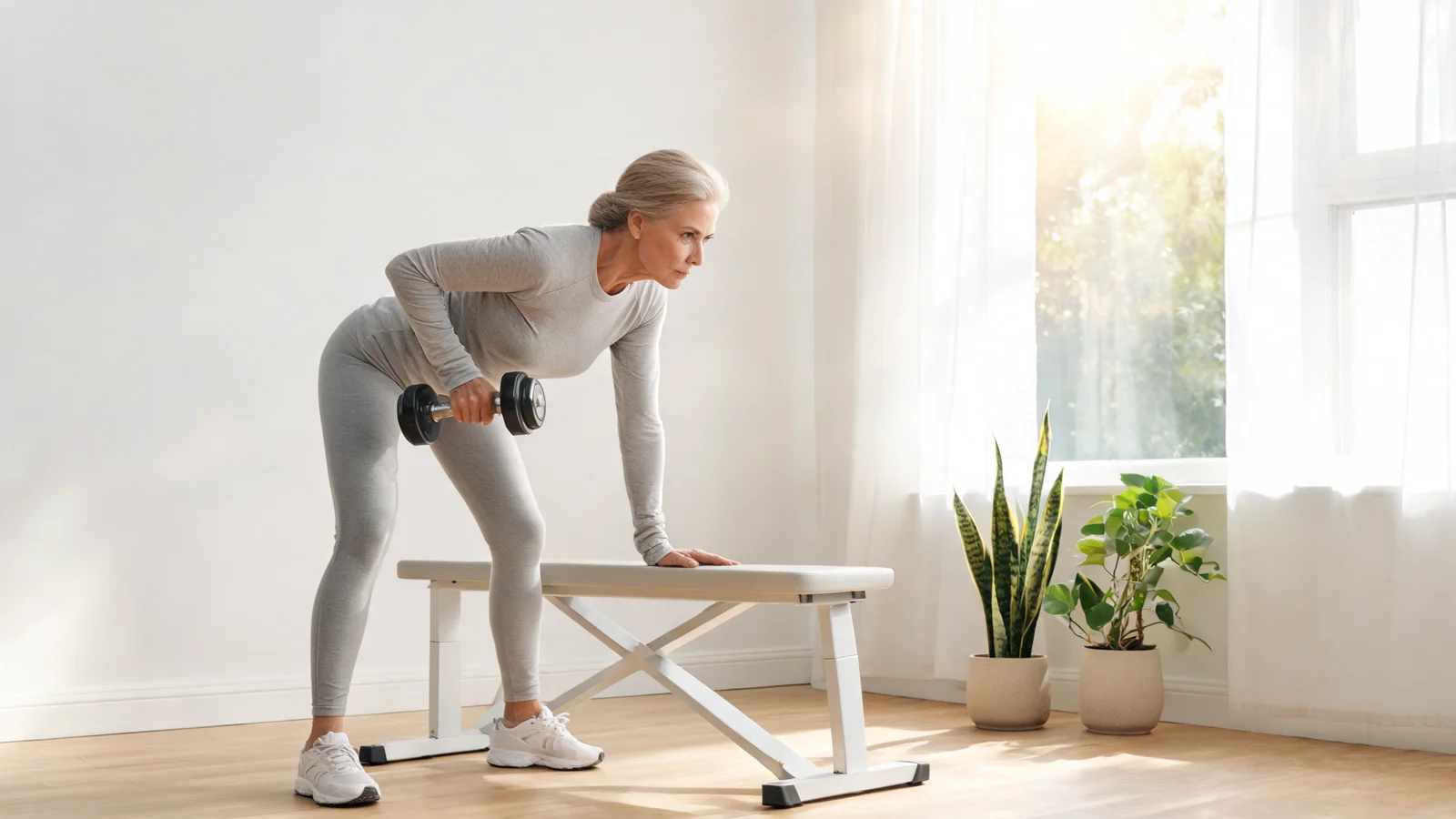
I walked into my first session five months ago and asked for a "toning workout." That was the word I used. Toning. The trainer (a woman in her early 40s, broad shoulders, calm expression) looked at me and said, "I'm not going to do that with you. We're going to lift heavy things instead."
I almost left. I had spent twenty years on Pilates mats and treadmills, and the idea of picking up an actual barbell felt physically wrong, like wearing a man's coat. She handed me a 35-pound dumbbell and walked me through a deadlift. I did five reps. My lower back was sore for three days.
I have not missed a session in twenty weeks.
What I Thought Strength Training Was
I thought it was bodybuilding. I thought it was bulky shoulders and grunting men in tank tops. I thought it was for women in their twenties or thirties who already had the bodies they wanted and were trying to sculpt them further. I did not think it was for a 55-year-old woman with a Pilates background and a quiet preference for soft sweaters.
I was wrong about every part of that. What strength training actually is, particularly after 50, is the single most evidence-backed thing a postmenopausal woman can do for her body. It addresses bone density (the slow erosion that becomes a crisis if it isn't actively countered after menopause). It addresses sarcopenia (the muscle loss that quietly undermines independence in the seventies and eighties). It addresses metabolic rate. It addresses joint stability. It addresses mood and sleep and confidence.
I had spent twenty years doing the wrong workouts because I was afraid of looking bulky. The thing I was actually losing was muscle I would need at seventy.
What Five Months Actually Looked Like
Weeks One to Four: Sore Everything
The first month was full-body sore. Stair-climbing was funny in the worst way. My grip strength was embarrassing (I could not hold a 30-pound dumbbell for the duration of a single set). My form was terrible and my trainer corrected it every thirty seconds. I left every session red-faced and emotional, and I came back two days later anyway because something in the soreness felt like progress in a way that no spin class ever had.
Weeks Five to Twelve: The Body Started Adapting
By week six, the soreness was lighter and I could climb stairs again like a normal human. By week eight, I noticed my posture had shifted (my shoulders sat back instead of rounded forward). By week ten I had to buy new bras (a sentence I did not expect to write at 55) because my upper back had filled out. By week twelve, my deadlift had moved from 95 pounds to 135. I was sleeping harder than I had in years.
Weeks Thirteen to Twenty: The Stuff Nobody Tells You
By week fifteen, my mood had shifted in a way I struggle to describe except to say that I felt steadier. The kind of low-grade postmenopausal flatness I had been quietly carrying around had thinned out. I had more energy at 4 p.m. than I had had at 2 p.m. for three years. My waist had pulled in two inches without any change in my eating. My deadlift hit 175.
The Supplements That Actually Mattered
I was skeptical of supplements when I started. Most of them are wellness theater. After five months, the short list that earned its keep:
Protein, Especially Collagen
Postmenopausal women need substantially more protein than the standard guidelines suggest. Most experts in this space land somewhere around 1.0 to 1.2 grams of protein per pound of lean body mass per day for women who are actively training. For me, that's about 110 grams of protein a day. Hitting that number from food alone is harder than it sounds, and a daily scoop of collagen peptides was the easiest reliable way to add 20 grams without thinking about it.
I run Vital Proteins Collagen Peptides in my morning coffee, every day, no exceptions. The hair, skin, and joint adjacent benefits are the bonus. The actual reason I take it is the protein math.
The protein I scoop into my coffee every morning
Vital Proteins Collagen Peptides is the single most-used product in my supplement stack. 20 grams of protein per scoop, mixes cleanly into hot or cold liquids, no taste, no clumps. The 15% direct affiliate rate also makes this one of the easier brands for content creators to recommend; I'd recommend it regardless.
See Vital ProteinsCreatine Monohydrate
The cheapest, most-studied performance supplement in existence, and one with a growing body of research specifically for postmenopausal women. 5 grams a day in my morning coffee or smoothie. The strength gains accelerated noticeably starting around week six of taking it.
HUM Hair Sweet Hair (For Recovery, Surprisingly)
I started this for hair thinning, not strength training. What I noticed by week four was that my training recovery was lighter, which I attribute to the biotin, vitamin D, and zinc dose. Many women report similar adjacent benefits. Worth flagging.
Magnesium Glycinate at Bedtime
Without sleep, the muscle does not build. The 400 mg of magnesium glycinate I take at bedtime is the unsexy supplement that holds the whole thing together. Covered in detail in my magnesium glycinate piece.
What I Wish I'd Known at 50
- You won't get bulky. Postmenopausal estrogen levels physically prevent the muscle volume gains some women fear. You will get stronger and your posture will change, but you will not become a different person's body.
- Two sessions a week is enough. I lift heavy twice a week for 45 minutes. The rest of my movement is walking and the occasional yoga class. The "more is better" instinct is wrong here.
- Find a trainer who has lived in this body. The 28-year-old shouting at the spin class does not understand your training needs. A woman in her forties or older who has trained postmenopausal clients does.
- Form before weight, always. The deadlift form errors that produced my week-one back soreness disappeared once my form sharpened. Most injuries at 50+ in strength training are preventable.
- Eat the protein. The training without the protein produces marginal results. The protein without the training produces nothing. The combination is what works.
What Hasn't Changed
I have not lost weight. The scale is roughly where it was five months ago. My body is meaningfully different (waist smaller, shoulders rounder, posture upright, energy higher), but the number on the scale is the same. If your goal is the scale, strength training will frustrate you. If your goal is to live in a body that works, the scale is the wrong dashboard.
Where I'm Going Next
Adding a third weekly session at month six. Working on pull-ups (currently zero, target one by year-end). Continuing to push the deadlift. Learning to enjoy soreness. Buying more sweaters that fit my new shoulders. None of this would have happened if I had walked out of that first session when she refused to give me the toning workout.
Start with the protein
Before the trainer, before the gym membership, before the new shoes, the single biggest leverage point at 50+ is hitting a protein target you are almost certainly under. A daily scoop of collagen peptides in your coffee is the lowest-friction first move.
See Vital Proteins